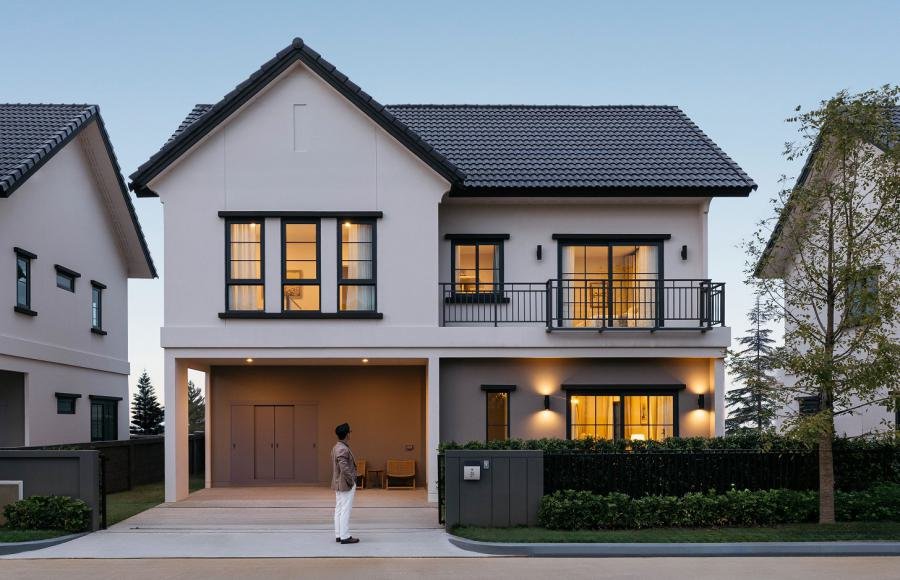
A condo near public transportation and a single house in a suburban residential project can both be strong long-term housing options, but they support very different lifestyles.
One of the most important factors when choosing between the two is commuting. A condo near a train station is often more suitable for people who spend most of their time in the city and rely on public transportation, while a suburban single house is generally better for those who want more living space and are comfortable travelling by car.
Before deciding between a condo and a single house, it is worth considering location, usable space, ongoing costs, and how your lifestyle may change in the future.
Location and Commuting: Condo Near Transit vs Single House
Condo Near Transit
One of the main advantages of a condo near public transportation is convenience, especially for projects located close to BTS, MRT, or other mass transit systems. This can help reduce reliance on a private car and make daily commuting easier.
Many condo projects are also located near business districts, workplaces, restaurants, shopping centres, and key urban destinations. This makes them well suited to office workers, students, or anyone who travels to multiple places throughout the day.
Suburban Single House
Single house projects in areas such as Rangsit, Pathum Thani, Bangna, or Bangna–Suvarnabhumi are often located near major roads, expressways, and ring roads, making them suitable for residents who mainly travel by private car.
One of the key advantages is greater flexibility when travelling to different parts of the city, while also offering more living space compared with centrally located properties at a similar price point.
Before choosing a single house, it is important to consider how often you need to commute into the city and whether the routes between your home, workplace, school, or other frequently visited destinations are convenient.
Living Space and Privacy
Condo Near Transit
Condos are designed to maximise the use of space, with each area planned carefully to support essential daily functions such as sleeping, relaxing, cooking, and storage.
Because of their more compact size, condos are often suitable for people living alone, couples, or smaller households that prioritise convenience over having a large amount of space.
However, as condo living involves sharing a building with other residents, there may be more limitations in terms of privacy and noise. It is therefore important to consider whether this living environment suits your lifestyle.
Single House
One of the main strengths of a single house is the greater amount of usable space and privacy, both inside the home and around the property.
Whether you are considering a single house in Rangsit, a single house in Bangna, or a home in the Bangna–Suvarnabhumi area, this type of property is often suitable for families that need more rooms, a home office, a children's area, or additional private living space.
Outdoor areas can also be adapted into a garden, activity space, or pet-friendly area depending on the needs of the household.
Single House Projects from REAL ASSET
For those looking for a suburban single house, REAL ASSET offers projects in several locations designed to support different lifestyles:
When choosing a project, it is important to consider not only the house itself but also the distance from places you visit regularly, access to major roads, usable space, and the lifestyle needs of everyone in the household.
Costs and Maintenance
Beyond the purchase price, ongoing living expenses are another important consideration, as condos and single houses come with different cost structures.
Costs of Living in a Condo Near Transit
Urban living expenses
Condos located in central areas may come with higher daily living costs, including food, services, shopping, and entertainment. However, residents may save on some transportation expenses if they primarily use public transportation rather than a private car.
Common area fees
Condo common area fees usually cover the maintenance of shared facilities, security systems, lifts, swimming pools, fitness centres, and other communal spaces within the development.
Before purchasing, it is worth considering whether these facilities genuinely suit your lifestyle and whether you are likely to use them regularly.
Investment potential
Condos located in areas with strong residential demand and convenient transportation may offer opportunities for both personal use and rental investment.
However, other factors should also be considered, including project pricing, supply in the area, tenant demand, and current market conditions.
Costs of Owning a Single House
For suburban single houses, such as a single house in Rangsit or other homes in Pathum Thani and Bangna, additional expenses may include:
Commuting costs
Residents who rely on a private car should account for fuel, toll fees, car insurance, maintenance, and other transportation-related expenses.
The most useful way to assess these costs is to look at your actual routine. Ask yourself whether you need to travel into the city every day, what time you normally commute, and whether the monthly cost fits comfortably within your budget.
Home maintenance costs
A single house generally requires more maintenance than a condo because the owner is responsible for a larger area, including the structure, roof, garden, and surrounding spaces.
The advantage is greater control over the property, as homeowners have more freedom to maintain, renovate, or personalise their space according to their needs.
Investment potential
A single house in a well-connected location near workplaces, schools, shopping centres, or major infrastructure may also have long-term value potential.
However, different property types have different levels of liquidity and market demand, so investment decisions should always be based on the buyer's objectives.
What Type of Lifestyle Suits a Condo Near Transit?
A condo near public transportation may be a good fit for people who value commuting convenience and easy access to the city, such as:
Office workers who regularly use BTS or MRT
People living alone or couples
Those who do not want to maintain a large property
People who enjoy being close to restaurants, shopping centres, and urban lifestyle destinations
Those who want to reduce dependence on a private car
What Type of Lifestyle Suits a Single House?
A single house may be more suitable for people who prioritise space and privacy, such as:
Families that need more living space
Those planning to expand their family in the future
People who need a home office or flexible-use room
Families with children or pets
Residents who are comfortable travelling by private car
Those who prefer a quieter residential environment outside the city centre
Condo Near Transit or Single House: Which One Offers Better Value?
There is no single answer for everyone because value depends on lifestyle and long-term plans.
If you work in the city, use public transportation regularly, and do not need a large amount of space, a condo near a train station may save commuting time and fit your daily routine better.
On the other hand, if you need more space, greater privacy, or are planning for family life in the long term, a single house may be the better choice, even if commuting and maintenance costs are higher.
Conclusion: Should You Choose a Condo Near Transit or a Single House?
Choosing the right home should begin with understanding your actual lifestyle rather than simply comparing property types.
Consider where you work, how you usually commute, how much space you need, whether you plan to expand your family, and whether you prefer city living or a quieter suburban environment.
Once you understand your priorities clearly, deciding between a condo near public transportation and a single house becomes much easier, and you are more likely to choose a home that supports your lifestyle in the long term.
Explore more details about single houses, twin houses, townhomes, and condominiums here.
Website : www.realasset.co.th
Facebook : www.facebook.com/RealAssetDevelopment
Instagram : www.instagram.com/realasset.development/
LINE Official : @realasset or https://lin.ee/kSfFgQP
Youtube : www.youtube.com/@RealAssetDevelopment
Call Center : 1232
E-Mail : info@realasset.co.th
Frequently Asked Questions
1.Is a condo near a train station or a single house better for people working in the city?
For those who commute into the city regularly and rely on public transportation, a condo near a BTS or MRT station may be more convenient and can help reduce commuting time. However, a suburban single house can also be a suitable option for hybrid workers or those who do not need to travel into the city every day.
2.Is a condo or a single house better for families?
A single house is generally more suitable for families that need multiple rooms, greater privacy, or extra space for children and future family expansion. A condo may be more suitable for smaller households that prioritise convenient transportation and access to urban amenities.
3.Is commuting from a suburban single house to Bangkok difficult?
It depends on the location of the project. Single houses located near major roads, expressways, or the Outer Ring Road can provide convenient access to Bangkok. Before making a decision, buyers should test their actual commuting route during the hours they normally travel.
4.What are the main expenses of living in a condo near a train station?
In addition to the purchase price or monthly mortgage payments, condo owners should consider common area fees, utilities, internet costs, and daily living expenses in the surrounding area, particularly for projects located in central Bangkok.
5.Does a single house cost more to maintain than a condo?
In general, a single house may require higher maintenance costs because the owner is responsible for a larger area, including the house, garden, roof, and other systems. However, homeowners also have greater freedom to manage, renovate, and personalise their space.
6.Is buying a condo near a train station a good investment for rental income?
A condo near public transportation can have rental potential if it is located in an area with genuine demand, such as near business districts, workplaces, or universities. Buyers should also consider rental rates, competing supply, occupancy demand, and ongoing costs before investing.
7.Is a single house suitable for pet owners?
Single houses generally provide more space for pets and greater flexibility in organising indoor and outdoor areas. However, homeowners should still check the rules of each residential project and consider whether the available space suits the type and number of pets they have.
8.What should I consider first when choosing between a condo and a single house?
Start with your actual lifestyle. Consider where you work, how you normally commute, the size of your household, your budget, and your future plans. These factors will make it easier to determine whether a condo near public transportation or a single house is a better long-term fit.