People from Okinawa are recognized as one of the populations living in the Blue Zones, known for having some of the longest lifespans in the world. Studies show that Okinawan women have an average life expectancy of up to 90 years, while men average around 84 years. There are also many individuals over 100 years old who remain healthy and active. The key to their longevity lies in their lifestyle and dietary habits.
As REAL ASSET promotes the Ever Green concept—encouraging residents to consume more fruits and vegetables for better health and longer life—we would like to introduce the Okinawan Diet. Let’s explore how this way of eating can help you live a longer and healthier life.
Eat Until You Are 80% Full
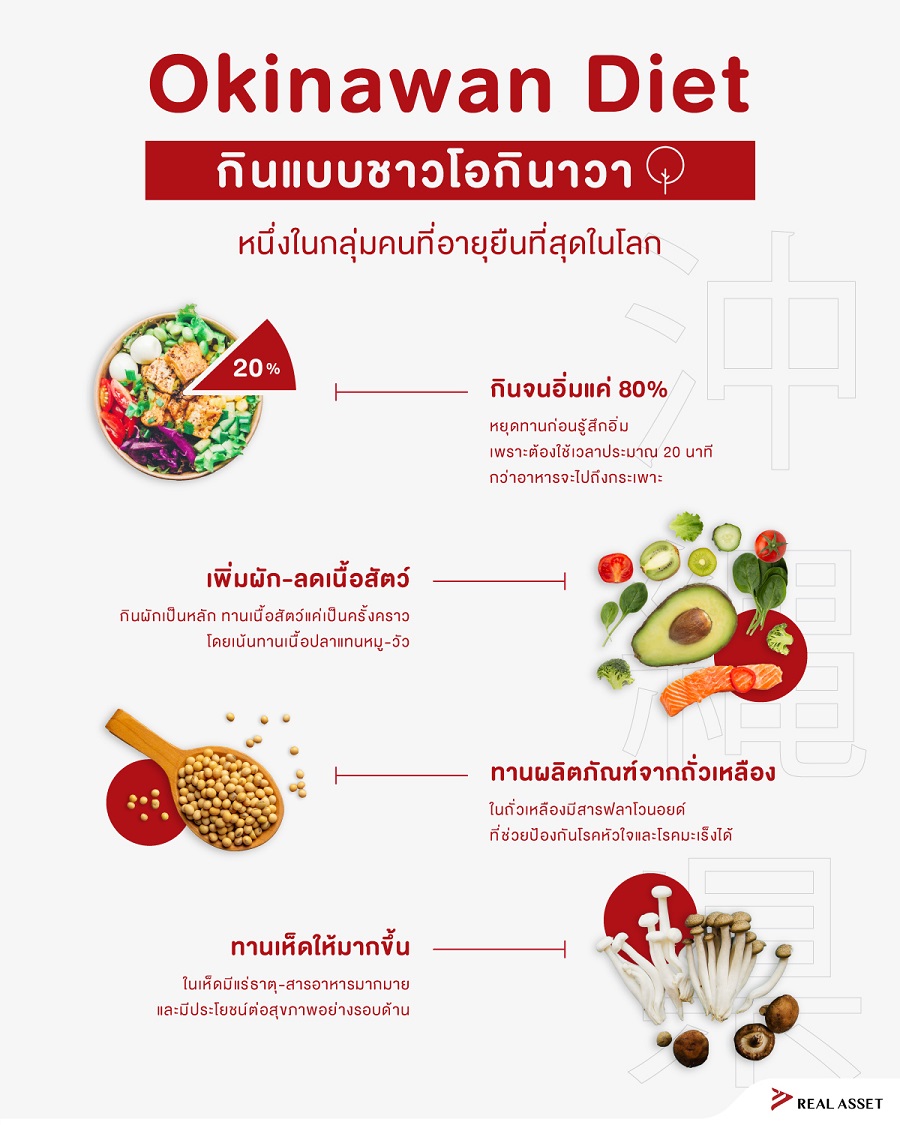
Okinawans follow the principle of “Hara Hachi Bu,” meaning they eat until they are only 80% full. In simple terms, they stop eating before feeling completely full. Since it takes about 20 minutes for the body to register fullness, stopping early helps prevent overeating.
Increase Vegetables, Reduce Meat
Their diet is primarily plant-based, consisting mostly of vegetables that are easy to grow locally, such as bitter melon, radish, gourd, and purple sweet potatoes. Meat consumption is limited, with fish being the most commonly consumed protein, while pork, beef, and chicken are eaten sparingly.
Consume Soy Products Regularly
Soy-based foods like tofu and miso soup are staples in the Okinawan diet. Soy contains flavonoids that help prevent heart disease and cancer. Fermented soy products such as miso and natto also provide beneficial probiotics that support gut health.
Eat More Mushrooms
Since meat consumption is low, mushrooms are often used as a substitute for nutrients typically found in meat. Mushrooms are rich in vitamins and minerals and offer numerous health benefits, including boosting the immune system, reducing cancer risk, and lowering blood fat levels.

Source :
https://bit.ly/3d2NcVT
https://bit.ly/3gLmWSr
https://bit.ly/3gW6s8y
https://bit.ly/3qinrGD
------------------------------------------
Explore more details about single detached homes, townhomes, home offices, and condominiums at:
Website : www.realasset.co.th
Facebook : www.facebook.com/RealAssetDevelopment
Instagram : www.instagram.com/realasset.development/
LINE Official : @realasset หรือ https://lin.ee/kSfFgQP
Call Center : 1232
Question: What is the Okinawan Diet?
Answer: The Okinawan Diet is an eating style based on the traditional habits of people in Okinawa. It emphasizes eating in moderation, increasing vegetables, reducing meat, and choosing soy-based foods and mushrooms
Question: What does Hara Hachi Bu mean?
Answer: Hara Hachi Bu is the idea of eating until you are about 80% full, or stopping before you feel completely full, to help control the amount of food consumed.
Question: What vegetables are commonly eaten in the Okinawan Diet?
Answer: Common vegetables include bitter melon, radish, gourd, and purple sweet potato.
Question: Does the Okinawan Diet include meat?
Answer: The diet focuses mainly on vegetables and includes relatively little meat. When animal protein is eaten, fish is more common than pork, beef, or chicken.
Question: Why are soy-based foods common in the Okinawan Diet?
Answer: Soy-based foods such as tofu and miso soup are regularly consumed. The source also highlights nutrients and beneficial microorganisms found in fermented foods such as miso and natto.
Question: What role do mushrooms play in the Okinawan Diet?
Answer: Mushrooms are eaten more often as an alternative to some animal-based foods and as a source of minerals and vitamins.